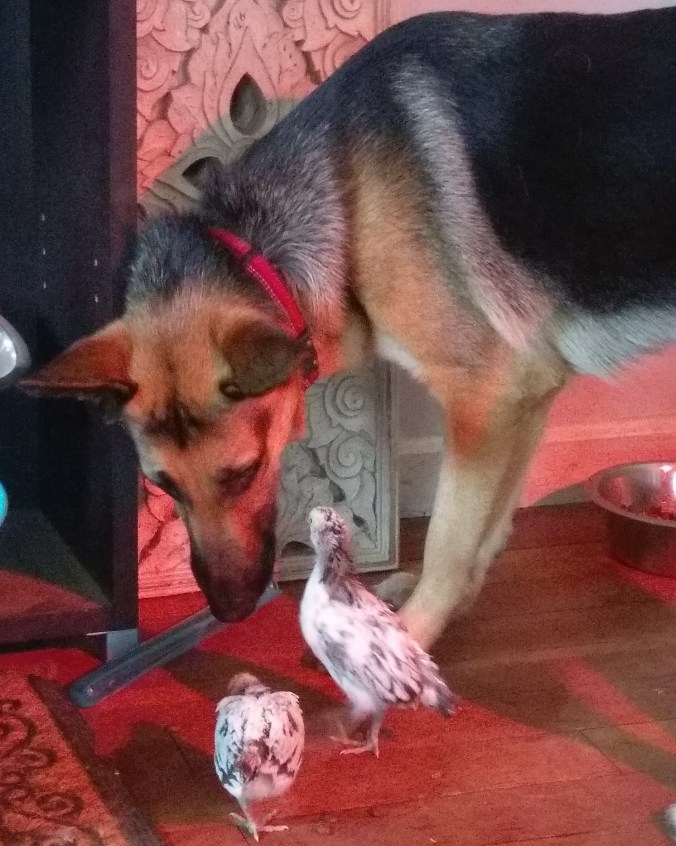
Each evening, as I finish my day at work, I come home and am immediately welcomed by the various creatures that inhabit Priddy Acres. Michelle lets Goose (Alaskan Malamute) and Charlie (German Shepherd) out of the house and they come running around the corner to where I park my rig. They give me the customary sniff down to make sure I haven’t been cheating on them, run out into the North forest to check out any wildlife that may be perusing the foliage, use the bathroom, harass the chickens a little bit. You know…normal dog stuff. What I didn’t expect, is that our flock of chickens also come running to me when I get home.
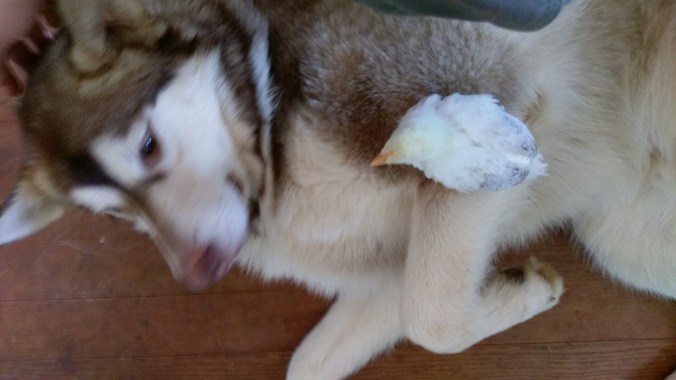
When we got our chickens, which we now refer to as our “gateway livestock” thanks to a magazine article we read at Wilco, we weren’t expecting them to act like family pets. I find myself increasingly fascinated by their weird behavior. Whenever we (or anyone else) show up, they immediately run over to that person and start pecking around. I’m not sure why, as they are mostly fed by free ranging on the property so we haven’t really cultivated the kind of behavior that usually results from feeding them whenever you come outside. These chickens are so domesticated that I can literally reach down and pick one up with barely a slight squawk. When I go out to the hen house at night, to close them up, I count each chicken and pet their head a little. Some of them raise a small fuss at being disturbed, but mostly they just sit there and make a slight whirring sound. I like to think it’s a little like a cat purring. Anyway, we have found that we love to watch them migrate all over the property. Sometimes, they get a wild hair up their butt and run across the yard flapping their wings, one after another, toward the hen house. This is pretty amusing, especially when the skinny hen does it. It reminds me of watching the old Looney Toons with the Road Runner. Since we are trying to make sure the chickens have the best possible living conditions, we have made a few decisions affecting their environment.
First, we decided to go with sand as the substrate in their hen house. It sounds kind of dirty when compared with straw and other organic matter that is generally used as a floor covering, but the arguments I read when trying to decide what to use made a lot of sense. Straw holds in moisture and moisture breeds bacteria, mold, and can contribute to frostbite in the winter due to moisture buildup. Sand doesn’t do that. Sand readily releases moisture, with the rate of dissipation mostly having to do with the size of the sand (bigger sand particles release it faster). This decreases the chance that any mold and/or bacteria will begin to develop and leads to a healthier situation for the birds. Second, with organic matter substrates there is no way to “clean” it, you just replace the floor covering every couple of weeks and use the old stuff in your garden or throw it away. With sand, it acts more like kitty litter. You can use a leaf rake to rake out most of the bird droppings or you can modify some common tools found at your local hardware store to make a big poo sifter (like a snow shovel with small holes in it). This makes sand last quite a bit longer. Sand is also pretty cheap. I got sand at Home Depot for around $4 per 50lb bag. I used 5 bags to coat my entire hen house floor, including the bench, with about 2 inches of sand (plus filled a couple of spots where the floor board was broken). I haven’t had to replace the sand yet (though I did throw another two bags in), but Michelle goes out every week or so and spends five minutes sifting out the droppings and evening out the sand. You, of course, lose some whenever you go into the hen house, because it sticks to your shoes, but so far so good. The chickens will also eat some of the sand. Since chickens don’t have teeth, most of the maceration of their food happens in a part of their body called the gizzard. Sand, rocks, and other hard material (like oyster shells) is used by the gizzard to grind up the actual food they eat. So, as you can see, eating small bits of sand is likely contributing to a healthy digestive system for them. There are many benefits of using sand, but sufficed to say that the few that I have described here were enough to convince me that it was the best way to proceed. As spring is now in full swing and our chickens are getting older, we are now starting to think about building some egg laying boxes for our chickens.

Egg boxes are an interesting thing. I have read that they need to be sort of away from the main traffic of the hen house, should be about a cubic foot in size, should have decent bedding which is kept “clean”, and contain a golf ball or plastic egg. The golf ball or plastic egg is there because, evidently, chickens like to lay eggs where there are already eggs. I read that you have to “train” your free ranging chickens to lay eggs in the hen house or you will be doing an egg hunt every day to find where they laid them. After doing a bunch of research, I think we are going to leave them in the hen house a little longer in the morning to give them a chance to learn where the laying boxes are (once I install them) when they start laying eggs. Ten AM should do it. We’ll let that be the routine for a few weeks or until we start seeing that eggs are being laid in the boxes. My plan is to attach the laying boxes to the back of the hen house, then cut holes for the hens to get in and out of them. I’ll make them accessible from the outside so we can collect eggs and replace bedding without having to go into the hen house. This should also eliminate the issue of the egg boxes taking up available space in the sleeping area of the hen house, since we want to add more chickens. It’s starting to get real exciting with the chickens getting close to being ready to generate some eggs!
Well, that’s about it from Priddy Acres today. We will be taking a video this evening of our hive inspection, which I expect will result in adding a second deep to each of the hives. For now, go fourth and be awesome!
 Priddy Acres